
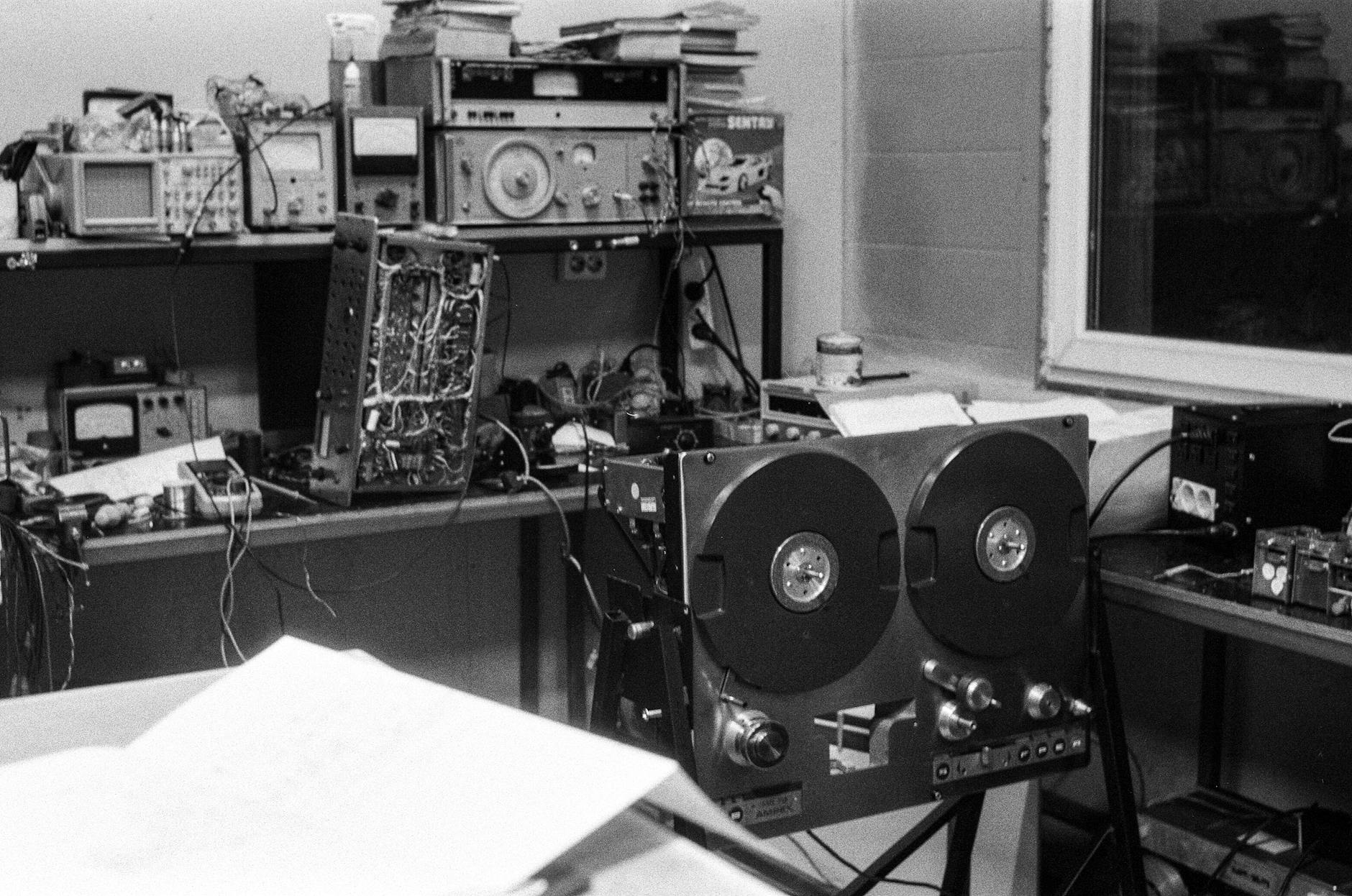
Was in the lab yesterday.
Yesterday I went to my friend’s studio and tried out a variety of mic + amp combinations. Made notes. Made recordings neatly labeled. It was a lot like lab in school.

I recently got a ribbon mic and learned about mid/side recording. Ribbons pick up in a figure 8 pattern. If you turn the mic sideways, put it upside down on top of a mic pointed at you or your acoustic guitar, you can have lush acoustic sounds. You make that ribbon left and right with its figure 8, and you have a beautiful stereo tone before you even get to effects. Mid/side recording. Little video about it:
Here’s one of the many combinations we tried:

Here’s what it sounded like:
We did this with a bunch of combinations. I personally like the SM57 on a cloudlifter and ribbon. Acoustic tone like mad. You’ll see.
Experiment.
Experimenting for me is a vibe. I might not know what I’m looking for, but I’m actively pursuing knowledge in whatever comes up. I’m fine with that having the gear and songs to record.
I learned mid/side recording is the tip of the iceberg for clever mic usage. I learned a lot about phasing and cloudlifters. I learned more about stereo field and effects. I learned about tone and a little about volume. Was a good day in the lab.

Knowing it, and knowing it for yourself are different.
Many folks out there rely on already established knowledge like I do, but they’re not in the lab ever. It’s as if they know it in theory, but not for themselves. I strongly recommend lab days in the studio. No one can tell you what something sounds like to you. Inside job. When you can hear a sound and know what’s making it, you’re keeping tricks up your sleeves for the next production. Whip out something like mid/side recording on a client who’s never heard of it and fill their ears with beautiful acoustic tone out of the gate, you might have a forever partner in music. (That’s what you want. If they keep coming back, they’re also telling their friends and other musicians about you. Just science.)

Give in to curiosity.
Being willing to try out and experiment is crucial for a producer, in my opinion. You get broad knowledge in how things work by tweaking, adjusting, and trying things out. A lot has been done to squelch the lab feeling in music. But there’s still plenty to discover for yourself, your mics, your room, and your instruments. I’d make the most of it. Put on a lab coat.
Resources I might use.
Enjoy that video up there. That dude on YouTube has some older videos, but the information is still solid. I don’t find his demeanor repulsive or sneaky. You might find folks you like on YouTube and start with their suggestions. Kinda’ how I do it.
Joe Gilder on YouTube works for PreSonus, for example. I use that DAW at a different studio. But I have learned tons from him that works in any DAW, just about. So even on my Logic Pro at home, Joe Gilder’s videos at work help me out. The principles don’t change from DAW to DAW. Just the labels and commands are different. No big deal for a seasoned lab rat.
About DAWs:
They’re all the same. They might have catchwords. They might have different specialties, but one isn’t better than the other for everyone. I use 3 of them routinely. PreSonus at another studio. Logic Pro at home. Garage Band on the iPad for mobile stuff. I love the LUNA DAW too. Starting a new DAW is a matter of fiddling with it, finding good YouTubes or literature on it, or both, and going to town. I’ll tell ya’, I’ve yet to run across a DAW that didn’t know what to do with good performances. But lots of them don’t do bad performances well. That’s a decision in disguise. Do you want to fix it in the machine? Or play it right? Up to you. Then pick a DAW. But I’d work out that question first. You may not need a DAW at all, that’s fine too. I love digital recorders, for example. A lot depends on the ability to play what you want to hear.

It’s about loading up your brain to make better decisions while recording.
Trying different things methodically and keeping notes is how a lot of things in the studio get better. It takes time and it’s a pain to set stuff up and tear it down all day. But lab days put you leaps and bounds ahead of folks not doing them. You wind up giving yourself knowledge you can use and a memory of sounds to associate with what you’ve learned. Priceless.
When you can hear a recording and know what’s going on, you can offer that if you have the stuff. I promise, that comes in handy. Take care. Good luck.
Return to home.

Acoustic guitar jam.
Just a jam with acoustic and djembe. Relaxing to me. Take care.